
American Tonalism Art and
American Tonalist Artists
Introductory Remarks
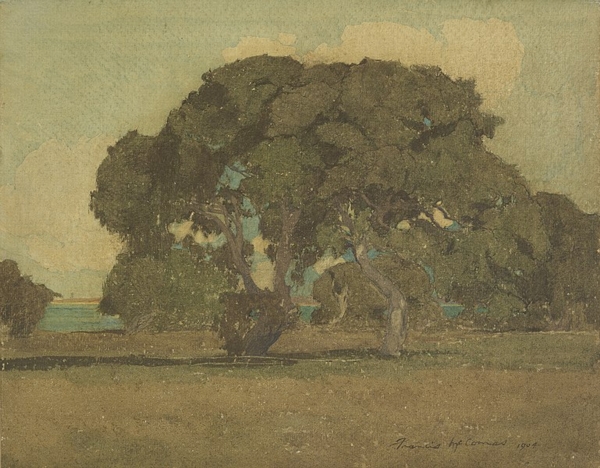
(above: Francis McComas, Oaks
of Monterey, California, 1904, 9.4 x 12.1 inches, Isabella Stewart
Gardner Museum. Public domain, via Wikimedia Commons*)
-
-
- American Tonalism, a significant art movement from the
1880s to the 1910s, is characterized by its soft, muted color palettes
and atmospheric effects, creating moody and introspective landscapes. This
movement is notable for its role in the evolution of American art, bridging
the gap between the traditional academic styles and the more modern approaches
that would follow.
-
-
- Roots
-
- Tonalism's roots can be traced to the influence of the
French Barbizon school, which emphasized naturalistic landscapes with subdued
tones. American artists like George Inness
and James McNeill Whistler
were pivotal figures in bringing this aesthetic to the United States. Inness,
often considered the father of American Tonalism, was renowned for his
ability to evoke profound spiritual and emotional responses through his
landscapes. Whistler, with his famous "Nocturnes," pushed the
boundaries of the style, blending it with elements of Aestheticism to create
works that emphasized mood over meticulous detail.
-
-
Please click
here to view artwork by George Inness
-
-
- Why it's important
-
- The importance of Tonalism in American art history lies
in its philosophical and aesthetic contributions. It emerged during a period
of great cultural and social change in the United States, providing a counterpoint
to the vibrant and colorful scenes of the Impressionists. While Impressionism
focused on capturing the transient effects of light and color, Tonalism
sought to evoke a sense of timelessness and introspection. This focus on
mood and atmosphere allowed Tonalist painters to explore themes of solitude,
contemplation, and the sublime aspects of nature.
-
- Prominent artists within the Tonalist movement include
Thomas Dewing, who
was known for his ethereal and often melancholic figure paintings, and
Ralph Ralph Albert Blakelock whose dark,
mystical landscapes drew on his personal struggles and inner turmoil. Albert Pinkham Ryder's
moody seascapes and nocturnes also exemplify the mysterious and often dreamlike
quality of Tonalist works. These artists, through their unique visions,
contributed to the rich tapestry of American art by emphasizing emotional
depth and subtlety
- .
-
- Why experience it?
-
- Experiencing Tonalist art provides several benefits to
viewers. Firstly, it offers a meditative and reflective experience. The
muted tones and serene compositions invite viewers to slow down and engage
with the artwork on a deeper emotional level. This can be particularly
therapeutic in our fast-paced modern world, offering a moment of tranquility
and introspection. Additionally, Tonalist paintings often evoke a sense
of nostalgia and timeless beauty, connecting viewers to a broader human
experience and the natural world.
-
- Furthermore, studying Tonalism enhances one's understanding
of the historical context and artistic developments of the late 19th and
early 20th centuries. It highlights the ways in which American artists
were both influenced by European traditions and simultaneously sought to
establish a distinct national identity in their art. This period of American
art history showcases a rich dialogue between tradition and innovation,
paving the way for subsequent movements such as American Impressionism
and early modernism.
-
- In conclusion, American Tonalism is a vital chapter in
the history of American art, marked by its subtle beauty and profound emotional
resonance. The works of Inness, Whistler, Dewing, Blakelock, and Ryder
continue to captivate and inspire, offering viewers a unique blend of introspection
and aesthetic pleasure. Through their atmospheric landscapes and nuanced
palettes, these artists have left an indelible mark on the artistic landscape,
one that continues to be appreciated and explored by art lovers and scholars
alike.
-
- The above brief essay was generated by AI and edited
in July, 2024.
 Return to Topics in American Representational Art
TFAO's Distinguished
Artists catalogue provides online access to biographical
information for artists associated with this state. Also, Search Resource Library
for online articles and essays concerning both individual artists associated
with this state's history and the history of art centers and museums in
this state. Resource Library articles and essays devoted to individual
artists and institutions are not listed on this page.
*Tag for expired US copyright of object
image:

Links to sources of information outside
of our web site are provided only as referrals for your further consideration.
Please use due diligence in judging the quality of information contained
in these and all other web sites. Information from linked sources may be
inaccurate or out of date. TFAO neither recommends or endorses these referenced
organizations. Although TFAO includes links to other web sites, it takes
no responsibility for the content or information contained on those other
sites, nor exerts any editorial or other control over them. For more information
on evaluating web pages see TFAO's General
Resources section in Online
Resources for Collectors and Students of Art History.
 Search Resource Library
Copyright 2024 Traditional Fine Arts Organization, Inc., an Arizona nonprofit corporation. All rights
reserved.