
AI Curiosities
Top image-search results for "California" history paintings
by Gemini 2.5 Pro preview 5/25
Many of the top image-search results for "California" history paintings come from major nonprofit museums and archives that have heavily digitized their collections. For example, the Los Angeles County Museum of Art (LACMA) explicitly advertises "nearly 20,000 images of artworks the museum believes to be in the public domain" on its sitecollections.lacma.org. Unsurprisingly, Google Arts & Culture reports 19,824 items in LACMA's collectionartsandculture.google.com, reflecting its vast holdings (including California landscapes by artists like Albert Bierstadt). Similarly, the Fine Arts Museums of San Francisco (the de Young and Legion of Honor) have a major California focus: Google Arts lists 450 items for the de Youngartsandculture.google.com. In general, Los Angeles and San Francisco institutions dominate due to their large art programs (for instance, LACMA's LA-centric collection and the de Young's American paintings). Even out-of-state museums show up: for example, the Cincinnati Art Museum's GA&C page highlights Bierstadt's Bridal Veil Falls, Yosemite Valley, California (1873), and its details appear indexed by Googleartsandculture.google.com. In short, museums with big California-related collections (LACMA, FAMSF, Crocker Art Museum, etc.) and strong digitization have a disproportionate presence.
Notable Collections in Google Images
· LACMA (Los Angeles County Museum of Art) Over 19,000 public-domain images (as stated on the LACMA website)collections.lacma.org, and ~19,824 items on Google Artsartsandculture.google.com. Its California landscape paintings (e.g. Bierstadt's Yosemite works) are well-represented.
· Smithsonian American Art Museum (Washington, D.C.) Over 4,100 items on Google Artsartsandculture.google.com, including many 19th-century Western landscapes (e.g. Bierstadt's Among the Sierra Nevada, California).
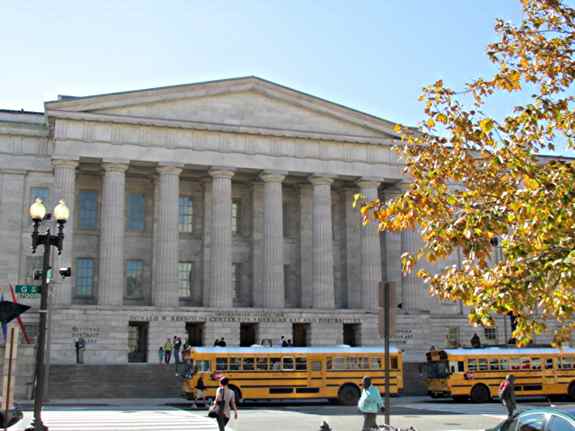
(above: Smithsonian American Art Museum. Photo © 2014 John Hazeltine)
· de Young Museum / Legion of Honor (San Francisco) Google Arts shows 450 itemsartsandculture.google.com. These collections include important California artists (OMCA notes its holdings of Bierstadt, Muybridge, Obata, etc.museumca.org).
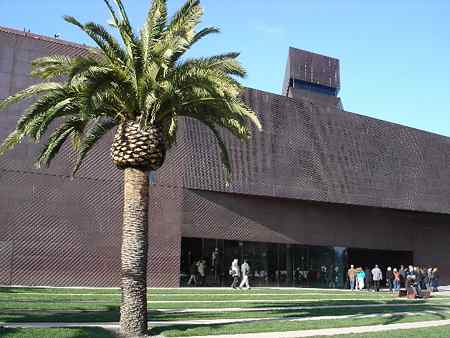
(above: entrance to de Young Museum. photo courtesy of John Hazeltine. © 2006 John Hazeltine)
· Crocker Art Museum (Sacramento) Known as "the world's foremost display of California art", it has 82 items on Google Artsartsandculture.google.com. It often appears for Gold Rush and Bay Area scenes.
· Other museums and archives Institutions like the Oakland Museum of California and the California Historical Society also post many CA-history images. For example, OMCA's website highlights masterpieces of California landscape (artists listed include Adams, Bierstadt, Muybridge, Weston, Obata, etc.)museumca.org. The California Missions Trail Alliance (a nonprofit) even curates an online archive of mission-era paintings. In practice, any nonprofit with sizable digitized holdings of California art from state historical societies to art museums can dominate relevant Google Image queries.
Digital Partnerships and Open Access
Several digital strategies boost visibility. Google Arts & Culture partnerships are key: not only LACMA and SF's museums, but also partners like Cincinnati (as noted) make artworks crawlable by Google. For example, Google Arts has pages for "California Spring" (Bierstadt, de Young collection) and "Bridal Veil Falls, Yosemite Valley, California"(Bierstadt, Cincinnati collection)artsandculture.google.comartsandculture.google.com, which Google Images easily indexes. Institutions that engage in such partnerships see their images rank higher.
Similarly, open-access collections and Wikimedia Commons feed into Google Images. Many public-domain California paintings are on Commons with metadata, so Google includes them. For instance, the Metropolitan Museum of Art (NY) released an oil painting titled "Dance in a Subterranean Roundhouse at Clear Lake, California" (by Jules Tavernier) under its Open Access program. The Wikimedia Commons page for this item identifies it as MET collectioncommons.wikimedia.org, making this California scene searchable. Commons even has a dedicated "Paintings of California" category (107 files in total)commons.wikimedia.org. In effect, Wikimedia aggregates California historical artworks from multiple institutions (Met, Brooklyn, etc.), boosting their Google Image visibility.
Other aggregators (like California's Calisphere) compile images from libraries and archives, though Google Images tends to feature the actual host sites or Commons more. In general, the combination of large collections, open licensing, and rich metadata/SEO makes certain nonprofits stand out. Summarized key factors include:
· Collection size and digitization Museums like LACMA (20k+ imagescollections.lacma.org) or Smithsonian American Art (4,154 itemsartsandculture.google.com) have voluminous digital catalogs of California works. The sheer number of indexed images translates into more Google hits.
· Google Arts & Culture content Partner institutions show up frequently. For example, LACMA's ~19,824-item GA&C profileartsandculture.google.com and the de Young's profileartsandculture.google.com mean many images are tagged with rich keywords and are Google-crawlable.
· Open archives (Wikimedia, Commons) Free, high-resolution images of California paintings (e.g. MET Taverniercommons.wikimedia.org) live on Wikimedia, which Google often surfaces. Commons' organized categories (107 CA paintingscommons.wikimedia.org) and open metadata help these images rank highly.
· Institutional focus & SEO Nonprofits dedicated to California heritage (state historical societies, art museums focused on local artists) optimize their sites for search. For instance, the Crocker emphasizes Gold Rush-era California, and OMCA highlights "Masterpieces of California Landscape"museumca.org. Such targeted content aligns closely with typical search terms ("California painting", "California landscape") and pushes these institutions' images up in results.
Examples: Albert Bierstadt's various California scenes appear across these platforms on LACMA's site, the de Young's GA&C profile, and Commons. The Huntington Library & Art Museum (San Marino, LA) often shows up too for its Californiana images. The net result is that when users search for historic California paintings or landscapes, Google Images is populated by entries from major California museums and archives (and their digital partners) rather than commercial galleries.
In summary, the nonprofits with the strongest Google Image presence for California historical paintings tend to be the large art museums (LACMA, SF's de Young/Legion, Crocker, etc.) and cultural organizations that have actively digitized and shared their collections. Their online efforts especially via Google Arts & Culture and open repositories ensure that their images rank highly in search. Citations above show how LACMA (19,824 itemsartsandculture.google.com), Smithsonian American Art (4,154)artsandculture.google.com, and others make up the bulk of California art images indexed by Google, driven by collection scope and digital access.
Sources: Institutional collection sites and Google Arts & Culture entriescollections.lacma.orgartsandculture.google.comartsandculture.google.comartsandculture.google.comartsandculture.google.comcommons.wikimedia.org, among others, document these quantities and examples of California paintings in nonprofit hands. They illustrate why certain museums' images dominate Google Image search for Californian art.
Please don't rely on this AI-generated
text for accuracy. It has been lightly edited, yet may be laden with inaccurate
information. Consider it a base for further inquiry.
 Return to:
California Artists: 19th-21st Century
California Regionalism and California School of Painters
Return to AI Curiosities
Return to Research Projects, Reports and Studies
*Tag for expired US copyright of object image:

TFAO Museum of American Art is proudly sponsored by Traditional Fine Arts Organization, Inc., an Arizona nonprofit corporation. All rights reserved. © 2024
Links to sources of information outside of this website are provided only as referrals for your further consideration. Please use due diligence in judging the quality of information contained in these and all other web sites. Information from linked sources may be inaccurate or out of date. TFAO neither recommends or endorses these referenced organizations. Although TFAO includes links to other web sites, it takes no responsibility for the content or information contained on those other sites, nor exerts any editorial or other control over them. For more information on evaluating web pages see TFAO's General Resources section in Online Resources for Collectors and Students of Art History.