New York Academy of Art
First in a series on America's centers of learning in traditional
methods and styles in the visual arts. Published in Resource Library
July 30, 1998
The New York Academy of Art, located in a landmark
building in Manhattan's TriBeCa district, is a prominent institution devoted
to the training of figurative artists. Emerging artists  from throughout the world come to the
Academy's Graduate School of Figurative Art to earn their Master of Fine
Arts degrees while studying traditional approaches to figure drawing, painting,
sculpture, anatomy and art history with instructors like Edward Schmidt,
Eric Fischl and Vincent Desiderio.
from throughout the world come to the
Academy's Graduate School of Figurative Art to earn their Master of Fine
Arts degrees while studying traditional approaches to figure drawing, painting,
sculpture, anatomy and art history with instructors like Edward Schmidt,
Eric Fischl and Vincent Desiderio.
Beginning artists, and those seeking intensive instruction in specific
areas of artmaking, study in the Academy's non-credit Continuing Education
Program, where they can  receive training in New York City from modern masters
like Nelson Shanks, copy Old Master works at the Metropolitan Museum of
Art, learn landscape painting in San Miguel de Allende, Mexico or attend
lectures on Tuscan art history and sketch at the Uffizi in Florence, Italy.
receive training in New York City from modern masters
like Nelson Shanks, copy Old Master works at the Metropolitan Museum of
Art, learn landscape painting in San Miguel de Allende, Mexico or attend
lectures on Tuscan art history and sketch at the Uffizi in Florence, Italy.
 The
Academy was founded in 1982 by a group of artists, critics and art patrons
whose goal was to ensure that those seeking academic training in figurative
art would have the same opportunities for study as their forebears. During
the last nine years the Academy has awarded M.F.A. degrees to 317 students.
Many of these students are now college teachers themselves--in institutions
that range from New York City's School of Visual Arts, Pratt Institute and
Parsons School of Design, to colleges throughout the U.S., such as the University
of the Arts, Montserrat College of Art and the University of North Florida.
International graduates of the Academy are now teaching in countries as
disparate as Mexico, Norway, Italy, Korea and Japan.
The
Academy was founded in 1982 by a group of artists, critics and art patrons
whose goal was to ensure that those seeking academic training in figurative
art would have the same opportunities for study as their forebears. During
the last nine years the Academy has awarded M.F.A. degrees to 317 students.
Many of these students are now college teachers themselves--in institutions
that range from New York City's School of Visual Arts, Pratt Institute and
Parsons School of Design, to colleges throughout the U.S., such as the University
of the Arts, Montserrat College of Art and the University of North Florida.
International graduates of the Academy are now teaching in countries as
disparate as Mexico, Norway, Italy, Korea and Japan.
Though some probably believe that the Academy is the kind of place where
people run around in togas, students are consistently encouraged to employ
traditional skills to create vital 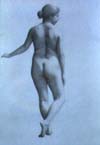 contemporary works. They learn that one of the artists
most involved with the founding of the Academy was Andy Warhol, who felt
that his own artistic options were limited by his lack of traditional training.
They are instructed by practicing artists who, before teaching at the Academy,
were oftentimes skeptical about the value of such an approach for contemporary
art students. As Eric Fischl puts it, "Before I taught there, my impression
of the place was that it was extremely reactionary and based on an outmoded
idea of what figuration could be. When I got there, I found students were
very open to attempting to apply figurative skills to contemporary subject
matter." He
contemporary works. They learn that one of the artists
most involved with the founding of the Academy was Andy Warhol, who felt
that his own artistic options were limited by his lack of traditional training.
They are instructed by practicing artists who, before teaching at the Academy,
were oftentimes skeptical about the value of such an approach for contemporary
art students. As Eric Fischl puts it, "Before I taught there, my impression
of the place was that it was extremely reactionary and based on an outmoded
idea of what figuration could be. When I got there, I found students were
very open to attempting to apply figurative skills to contemporary subject
matter." He 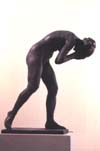 adds that "at most graduate schools where I've lectured,
the students have such attitudes that they're almost impenetrable, but these
students are there because they didn't learn anything they wanted to learn
in college. It's a very interesting situation. They are hungry."
adds that "at most graduate schools where I've lectured,
the students have such attitudes that they're almost impenetrable, but these
students are there because they didn't learn anything they wanted to learn
in college. It's a very interesting situation. They are hungry."
Instruction is held in the Academy's five-story building, which is located
near the heart of New York City's downtown art community. The facilities
include six classrooms, numerous student studios, a collection of anatomical
specimens that contains rare skeletons and a unique set of plaster dissection
casts made from specially prepared  cadavers, and a fine arts library that features books,
slides and videos that emphasize the historical periods in which figurative
art flourished--ancient Greece and Rome, the Renaissance, the Baroque and
Neo-Classical periods, as well as representational art and artists of the
twentieth century. The Academy's lecture and exhibition hall contains an
extensive collection of plaster casts of Classical, Renaissance and later
European sculpture.
cadavers, and a fine arts library that features books,
slides and videos that emphasize the historical periods in which figurative
art flourished--ancient Greece and Rome, the Renaissance, the Baroque and
Neo-Classical periods, as well as representational art and artists of the
twentieth century. The Academy's lecture and exhibition hall contains an
extensive collection of plaster casts of Classical, Renaissance and later
European sculpture.
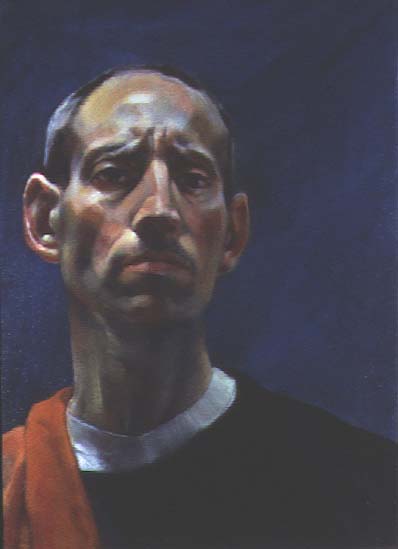
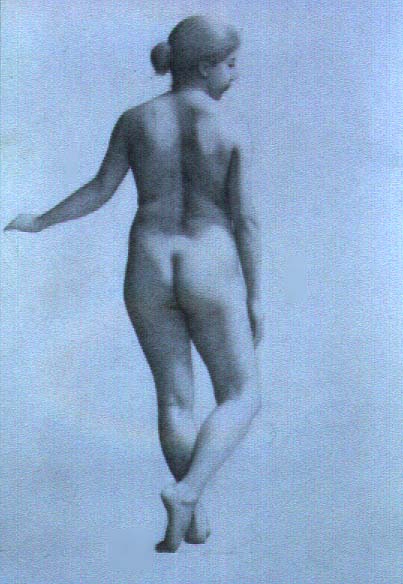
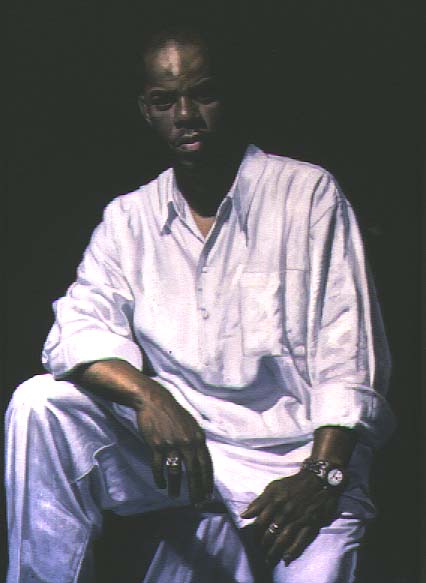
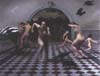
From top to bottom: Ruza Bagaric, Untitled, 1996;
Geoff Laurence, 1995; Moonjin Choi, 1998; Robert Armetta, 1998; James Oxford,
1993; James Hoston, James Howell, 1991, oil on linen, over panel,
40 x 30 inches.
Next page...
Search for more articles
and essays on American art in Resource Library. See America's Distinguished Artists
for biographical information on historic artists.
This page was originally published in 1998 in Resource
Library Magazine. Please see Resource Library's Overview section for
more information.
Copyright 2012 Traditional
Fine Arts Organization, Inc., an Arizona nonprofit
corporation. All rights reserved.
 from throughout the world come to the
Academy's Graduate School of Figurative Art to earn their Master of Fine
Arts degrees while studying traditional approaches to figure drawing, painting,
sculpture, anatomy and art history with instructors like Edward Schmidt,
Eric Fischl and Vincent Desiderio.
from throughout the world come to the
Academy's Graduate School of Figurative Art to earn their Master of Fine
Arts degrees while studying traditional approaches to figure drawing, painting,
sculpture, anatomy and art history with instructors like Edward Schmidt,
Eric Fischl and Vincent Desiderio.