Heckscher Museum of Art
Huntington, Long Island, NY
(516) 351-3250
Coney Island to Caumsett: The Photographic
Journey of N. Jay Jaffee, 1947-1997
September 4, 1999 through November 14, 1999
From the teeming streets of Brooklyn
to Long Island's lush landscapes, N. Jay Jaffee's camera captured sights
familiar to many Long Islanders. For a half-century, he recorded in photographs
a journey which parallels many a person's city-to-suburb progression.
 Just
out of the army in 1947, Jaffee (1921-1998) began to photograph the Brooklyn
neighborhoods of his youth -- East New York, Brownsville, Canarsie Bay,
Coney Island and Brighton Beach. Manhattan, with its allure of culture and
its magnetically-powerful concrete landscapes, also served as subject for
Jaffee's camera. For more than three decades it was Brooklyn, Queens and
Manhattan which provided the raw material of Jaffee's photography as he
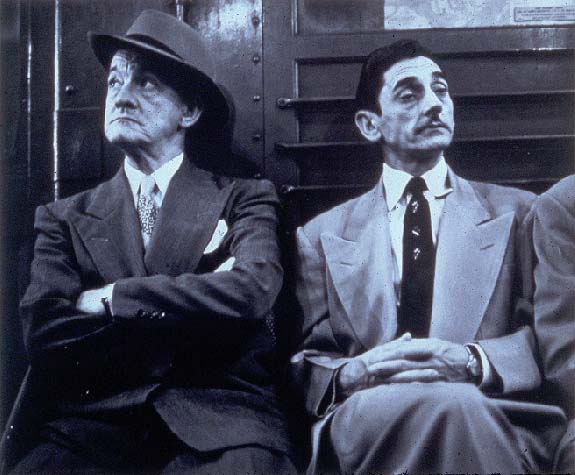
captured the movement and shadows of city streets, subways, markets, the
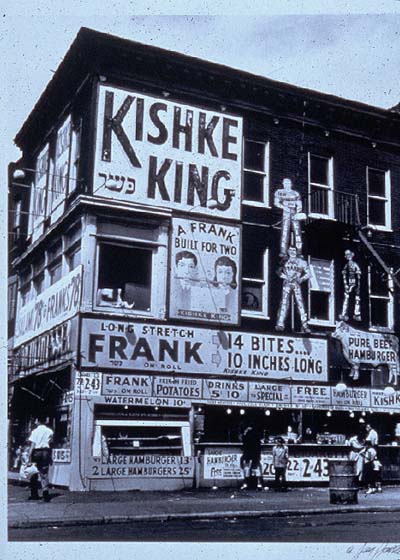
people who inhabited them, and the street signs which revealed the concerns
of the people and merchants of the city.
Just
out of the army in 1947, Jaffee (1921-1998) began to photograph the Brooklyn
neighborhoods of his youth -- East New York, Brownsville, Canarsie Bay,
Coney Island and Brighton Beach. Manhattan, with its allure of culture and
its magnetically-powerful concrete landscapes, also served as subject for
Jaffee's camera. For more than three decades it was Brooklyn, Queens and
Manhattan which provided the raw material of Jaffee's photography as he
captured the movement and shadows of city streets, subways, markets, the
people who inhabited them, and the street signs which revealed the concerns
of the people and merchants of the city.
Then in 1985, Jaffee moved to Lloyd Harbor. The focus of
his work shifted too; the city streets of his youth now replaced by the
sensuous landscapes of Long Island's North Shore. Jaffee's home in Caumsett,
on the windswept tip of Lloyd Harbor, served as a base for photographic
journeys through the neighborhoods of suburbia This later, nature-based
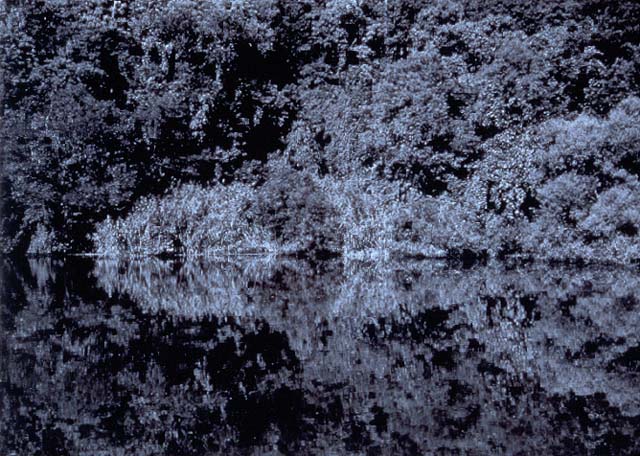
work of the late-80s and 90s focuses on the land and the water as he produced
lyrical images of the sky and woods which surrounded him.
According to Jaffee, "photographs are born of the
positives and negatives accumulated in a lifetime." Indeed, few bodies
of work are more biographical than is Jaffee's. For more than half a century,
the camera was the instrument through which he interpreted his world and
his place in it.
 Jaffee
was born in Brownsville; his mother was a Polish Jew, his father had emigrated
from Russia His first language was Yiddish. Like many of the residents of
the poor, immigrant community of Brownsville, his early life was marked
with hardships (an older brother was killed in an industrial accident) and
the chronic illnesses of his parents. By the age of 15, Jaffee was on his
own. He
Jaffee
was born in Brownsville; his mother was a Polish Jew, his father had emigrated
from Russia His first language was Yiddish. Like many of the residents of
the poor, immigrant community of Brownsville, his early life was marked
with hardships (an older brother was killed in an industrial accident) and
the chronic illnesses of his parents. By the age of 15, Jaffee was on his
own. He  supported
himself as a typesetter and was an active union member, an association which
contributed to his commitment to progressive politics and his sympathies
for the working man. Following his service in World War II, these sensibilities
which informed his work were further nurtured by his membership in the Photo
League, an organization at its most influential during the 30s and 40s and
which was dedicated to socially-concerned photography. The Photo League,
with its roster of teachers, students and guest lecturers which included
virtually every renowned photographer of the era, served as Jaffee's cultural,
aesthetic and professional training ground.
supported
himself as a typesetter and was an active union member, an association which
contributed to his commitment to progressive politics and his sympathies
for the working man. Following his service in World War II, these sensibilities
which informed his work were further nurtured by his membership in the Photo
League, an organization at its most influential during the 30s and 40s and
which was dedicated to socially-concerned photography. The Photo League,
with its roster of teachers, students and guest lecturers which included
virtually every renowned photographer of the era, served as Jaffee's cultural,
aesthetic and professional training ground.
Images from top to bottom: Kishke King, Brownsville, Brooklyn,
1953; Two Men in Subway, New York City, 1952; Spiritis of the
Woods and Ponds #1, Upper Lloyd Harbor Pond, 1997
Read more in the Resource Library about the Heckscher Museum of Art.
Search for more articles
and essays on American art in Resource Library. See America's Distinguished Artists
for biographical information on historic artists.
This page was originally published in1999 in Resource
Library Magazine. Please see Resource Library's Overview section for
more information.
Copyright 2012 Traditional
Fine Arts Organization, Inc., an Arizona nonprofit
corporation. All rights reserved.
 Just
out of the army in 1947, Jaffee (1921-1998) began to photograph the Brooklyn
neighborhoods of his youth -- East New York, Brownsville, Canarsie Bay,
Coney Island and Brighton Beach. Manhattan, with its allure of culture and
its magnetically-powerful concrete landscapes, also served as subject for
Jaffee's camera. For more than three decades it was Brooklyn, Queens and
Manhattan which provided the raw material of Jaffee's photography as he
captured the movement and shadows of city streets, subways, markets, the
people who inhabited them, and the street signs which revealed the concerns
of the people and merchants of the city.
Just
out of the army in 1947, Jaffee (1921-1998) began to photograph the Brooklyn
neighborhoods of his youth -- East New York, Brownsville, Canarsie Bay,
Coney Island and Brighton Beach. Manhattan, with its allure of culture and
its magnetically-powerful concrete landscapes, also served as subject for
Jaffee's camera. For more than three decades it was Brooklyn, Queens and
Manhattan which provided the raw material of Jaffee's photography as he
captured the movement and shadows of city streets, subways, markets, the
people who inhabited them, and the street signs which revealed the concerns
of the people and merchants of the city.