
Cummer Museum of Art & Gardens
Jacksonville, Florida
904-356-6857
James McNeill Whistler Etchings & Lithographs at The Cummer
Fifty etchings and thirty-one lithographs
by the renowned nineteenth-century American artist, James McNeill Whistler,
were on exhibition at The Cummer Museum of Art & Gardens from through
December 13, 1998. This extraordinary exhibition, Whistler: Impressions
of an American Abroad, Etchings and Lithographs from the Carnegie Museum
of Art, included works of art that represent the artist's entire range
of graphic expression.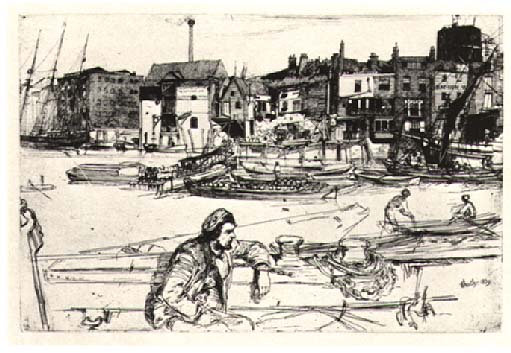
"Whistler is a great follow-up to Rembrandt,"
said Dr. Kahren J. Arbitman, director of The Cummer. "Together they
represent the world's two finest etchers."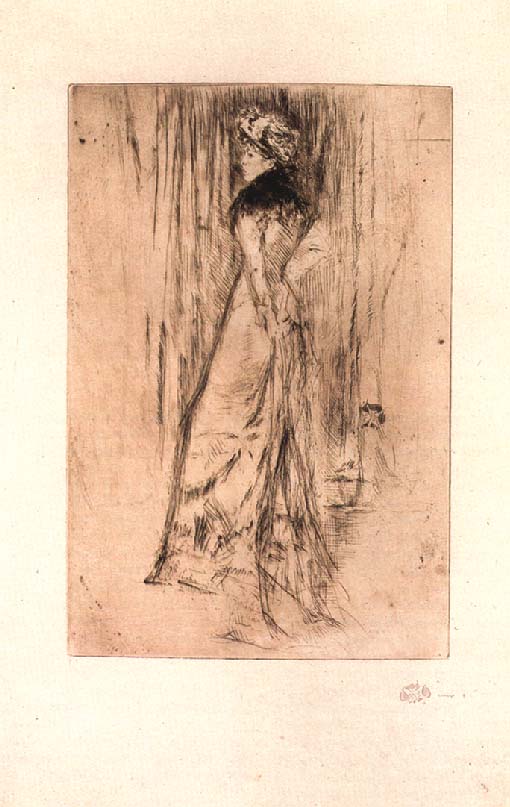
Born in Lowell, Massachusetts, Whistler spent most of his
adult life in Europe. When he arrived in Paris in 1853, the revival of etchings
as a medium for artistic creativity was just beginning. Whistler may have
been attracted to etching as a result of this renewed interest of the technique
among his peers. While the unglorified, descriptive portrayal of the ordinary
person or place was Whistler's goal, the subjects he would become known
for - the humble figure framed in a doorway, the obscure landscape, or the
effect o flight on a subject - makes its first appearance in his early works.
The exhibition represented a visual tour of several major
western European cities as seen through the American expatriate's eyes.
It included Whistler's acclaimed "French Set" of 1858, which depicts
Parisian genre; the "Thames Set" detailing scenes of everyday
life and ordinary people along London's famed river; as well as Whistler's
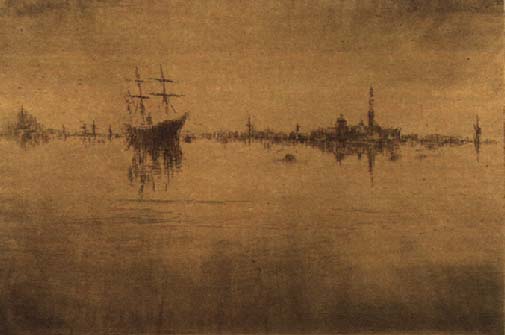
most inspiring and influential works, the "Venice Set", which
magically reveals the city of light and water captured on Whistler's etching
plates.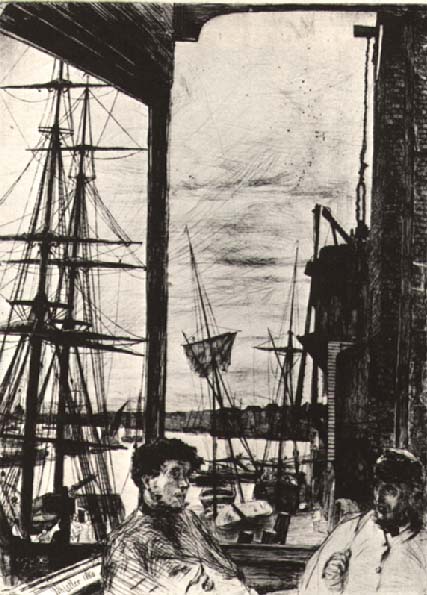
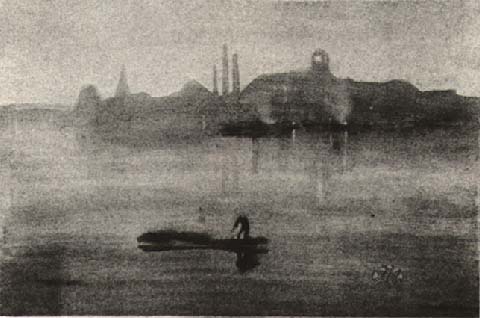
From top to bottom: The Draped Figure, Seated, 1893, Transfer lithograph with stumping on laid Japan paper, signed in pencil with the butterfly - inscribed by Whistler, "No. 2" - inscribed in letterpress, "T. WAY, IMP. LONDON," published in L'Estampe Originale, Album 4 (Paris, October-December, 1893), 8 3/4 6 3/4 inches; Black Lion Wharf, 1859, etching printed in black ink on laid paper, from the Thames Set, 5 1/2 x 8 1/2 inches; Maud Standing, c. 1873, etching and drypoint printed in black-brown ink on laid paper, 9 x 5 15/16 inches; Nocturne, 1879-80, etching and drypoint printed in black-brown ink on laid paper, from the First Venice Set, 7 1/4 x 10 1/2 inches; Nocturne The River at Battersea, 1878, lithotint with scraping, printed in black ink on Japan paper, mounted on wove paper, 6 3/8 x 10 1/8 inches; Rotherhithe, 1860, etching and drypoint printed in black ink on laid paper, from the Thames Set, 11 x 7 7/8 inches
Text and images courtesy of The Cummer Museum of Art & Gardens.
Read more about the Cummer Museum of Art & Gardens in Resource Library Magazine.
For further biographical information on selected artists cited in this article please see America's Distinguished Artists, a national registry of historic artists.
rev. 8/24/10
Search Resource Library for thousands of articles and essays on American art.
Copyright 2010 Traditional Fine Arts Organization, Inc., an Arizona nonprofit corporation. All rights reserved.