America's Distinguished Artists
a national registry of historic artists
A B C D E F G H I J K L M N O P Q R S T U V W X Y Z
Deceased American artists and artisans of note who created representational art are indexed in this catalogue by last name in alphabetical order. There are references to Resource Library texts and those from other sites. Click on letters below to access the alphabetical index.
Charles Noel Flagg from Resource Library article (not solely dedicated to this artist)
George Whiting Flagg from Resource Library article (not solely dedicated to this artist) also see George Whiting Flagg from Wikipedia
James Montgomery Flagg from Resource Library article (not solely dedicated to this artist) also see James Montgomery Flagg from Wikipedia
John Flannagan from Resource Library essay (not solely dedicated to this artist by a named author) also see John Flannagan from Wikipedia
Vaughn Flannery from Resource Library article (not solely dedicated to this artist) also see Vaughn Flannery from Cross Gate Gallery
Joseph Fleck from Resource Library essay (not solely dedicated to this artist by a named author) also see Joseph Amadeus Fleck from Wikipedia.
Frank Morley Fletcher from Resource Library essay (not solely dedicated to this artist by a named author) also see Frank Morley Fletcher from Wikipedia
Godfrey B. Fletcher from Resource Library biography dedicated to this artist by a named author
R. Foster Flint from Resource Library biography dedicated to this artist by a named author
Richard Aberle Florsheim from Resource Library article (dedicated solely to this artist)
Thomas Fogarty from Resource Library essay (not solely dedicated to this artist by a named author) and several articles, also see Thomas Fogarty from Paul Giambarba
Seymour Fogel from Resource Library essay (not solely dedicated to this artist by a named author) also see Seymour Fogel from Wikipedia
Margaret Foley from Resource Library essay (not solely dedicated to this artist by a named author) also see Margaret Foley from Wikipedia
John Folinsbee from Resource Library essay (not solely dedicated to this artist by a named author) also see John Fulton Folinsbee from Wikipedia
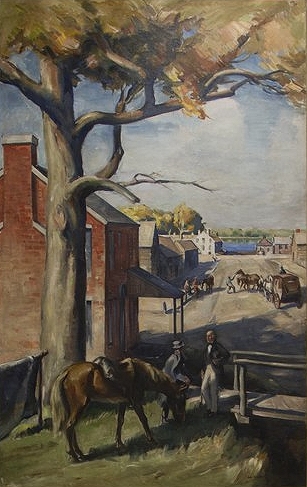
(above: John Folinsbee, Early Town
(Paducah, KY), 1939, courtroom mural at the Federal Building and
U.S. Courthouse, Paducah, Kentucky. Image courtesy of Carol M. Highsmith.
Public domain, via Wikimedia Commons**)
Samuel Folwell from Resource Library article (not solely dedicated to this artist)
Jade Fon from Resource Library essay (not solely dedicated to this artist by a named author) also see Jade Fon from California Watercolor Gallery
Mary Anna Hallock Foote from Resource Library essay (not solely dedicated to this artist by a named author) also see Mary Hallock Foote from Wikipedia
Will Howe Foote from Resource Library article (not solely dedicated to this artist) also see Will Howe Foote from Florence Griswold Museum
Edwin Forbes from Resource Library essay (not solely dedicated to this artist by a named author) also see Edwin Forbes from Wikipedia
Helen Katherine Forbes from Resource Library article (not solely dedicated to this artist) also see Helen Katherine Forbes from California State Parks - State of California
Henry Chapman Ford from Resource Library essay (not solely dedicated to this artist by a named author) also see Henry Chapman Ford from Wikipedia
Paintings by Henry Chapman Ford
Lauren Ford from Resource Library article (not solely dedicated to this artist) also see Lauren Ford from Rye History
James Edward Forkner from Resource Library essay (not solely dedicated to this artist by a named author) also see James Edward Forkner from Fine Estate Art
Gustave Forsberg from Resource Library essay (not solely dedicated to this artist by a named author)
Alice Atkinson Forsyth from Resource Library article (not solely dedicated to this artist) also see Alice Atkinson Forsyth from Fine Estate Art
Victor Clyde Forsythe from Resource Library article (not solely dedicated to this artist) also see Victor Clyde Forsythe from J. Mark Sublette, Medicine Man Gallery, Inc.
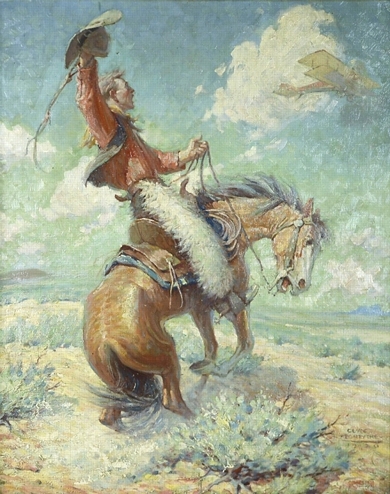
(above: Clyde Forsythe, Flying High, 1920, oil on canvas, Denver Art Museum, William Sr. and Dorothy Harmsen Collection. 2001.1257)
William Forsyth from Resource Library essay (dedicated to this artist by a named author) also see William Forsyth from Wikipedia
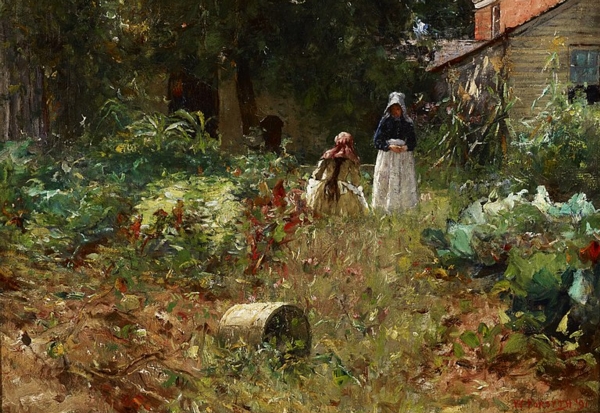
(above: William J. Forsyth, In the Garden, c. 1891, oil on canvas, 26 3/4 x 20 3/4 inches, Indianapolis Museum of Art, Gift from the Estate of Charlotte Hofmann Bose, 2014.7. Public domain, via Wikimedia Commons*)
Karl Fortress from Resource Library article (not solely dedicated to this artist) also see Karl Fortress from Annex Galleries Fine Prints
E. Charlton Fortune from Resource Library text for play by a named playwright
Paintings by E. Charlton Fortune
Ben Foster from Resource Library article (not solely dedicated to this artist) also see Ben Foster from Blue Hill Bay Gallery
E. T. H. Foster from Resource Library article (not solely dedicated to this artist) also see E. T. H. Foster from The Johnson Collection
Ethel Elizabeth Foster from Resource Library article (not solely dedicated to this artist)
John Foster from Resource Library article (not solely dedicated to this artist) also see John Foster from James A. Michener Art Museum
William Frederick Foster from Resource Library article (not solely dedicated to this artist) also see William Frederick Foster from Sullivan Goss, an American Gallery
Noburo Foujioka from Resource Library essay (not solely dedicated to this artist by a named author)
Alexis Fournier from Resource Library essay (not solely dedicated to this artist by a named author) also see Alexis Jean Fournier from Fine Estate Art

(above, Alexis Jean Fournier, Mill Pond at Minneapolis, 1888, Minneapolis Institute of Arts. Public domain, via Wikimedia Commons*)
Frances
Foy from Resource Library essay (not solely
dedicated to this artist by a named author) also see Frances
Foy from M. Christine Schwartz Collection
Return to TFAO's:
Distinguished Artists catalogue
*Tag for expired US copyright of object image:

**Tag for some rights reserved:

Links to sources of information outside of our web site are provided only as referrals for your further consideration. Please use due diligence in judging the quality of information contained in these and all other web sites. Information from linked sources may be inaccurate or out of date. TFAO neither recommends or endorses these referenced organizations. Although TFAO includes links to other web sites, it takes no responsibility for the content or information contained on those other sites, nor exerts any editorial or other control over them. For more information on evaluating web pages see TFAO's General Resources section in Online Resources for Collectors and Students of Art History.
 Search Resource Library
Copyright 2022 Traditional Fine Arts Organization, Inc., an Arizona nonprofit corporation. All rights reserved.