America's Distinguished Artists
a national registry of historic artists
A B C D E F G H I J K L M N O P Q R S T U V W X Y Z
Deceased American artists and artisans of note who created representational art are indexed in this catalogue by last name in alphabetical order. There are references to Resource Library texts and those from other sites. Click on letters below to access the alphabetical index.
Ed Paschke from Resource Library article (not solely dedicated to this artist) also see Edward Francis Paschke from Wikipedia
Jules Pascin from Resource Library essay (not solely dedicated to this artist by a named author) also see Jules Pascin from Wikipedia
William F. Paskell from Resource Library article (not solely dedicated to this artist) also see William F. Paskell from White Mountain Art & Artists
John Dos Passos from Resource Library article (dedicated solely to this artist)
Albert Patecky from Resource Library essay (not solely dedicated to this artist by a named author) also see Albert Patecky from The Oregon Encyclopedia
Ambrose Patterson from Resource Library biography dedicated to this artist by a named author, also see Ambrose Patterson from Paul G. Allen Center for Computer Science & Engineering
Margaret Patterson from Resource Library article (dedicated solely to this artist)
Viola Patterson from Resource Library essay (not solely dedicated to this artist by a named author) also see Viola Patterson from Archives of American Art, Smithsonian Institution
James William Pattison from Resource Library essay (not solely dedicated to this artist by a named author) also see James William Pattison from M. Christine Schwartz Collection
Robert J. Pattison from Resource Library essay (not solely dedicated to this artist by a named author) also see Robert J. Pattison from Questroyal Fine Art, LLC.
Garnet Pavatea from Resource Library article (not solely dedicated to this artist) also see Garnet Pavatea from Adobe Gallery
Philip Pavia from Resource Library essay (not solely dedicated to this artist by a named author) also see Philip Pavia from Archives of American Art
Edgar Paxson from Resource Library article (not solely dedicated to this artist) also see Edgar Samuel Paxson from Wikipedia
Artwork by Edgar Samuel Paxson
Ethel Paxson from Resource Library article (not solely dedicated to this artist) also see Ethel Paxson from Archives of American Art, Smithsonian Institution
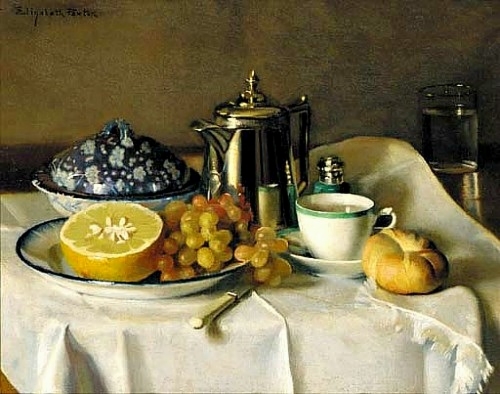
Elizabeth Paxton from Resource Library essay (not solely dedicated to this artist by a named author) also see Elizabeth Okie Paxton from Wikipedia
(above: Elizabeth Okie Paxton, Continental Breakfast, c. 1910, oil on canvas, 16 x 20 inches, Christie's. Public domain, via Wikimedia Commons*)
More artwork by Elizabeth Okie Paxton
William McGregor Paxton from Resource Library article (not solely dedicated to this artist) also see William McGregor Paxton from Wikipedia
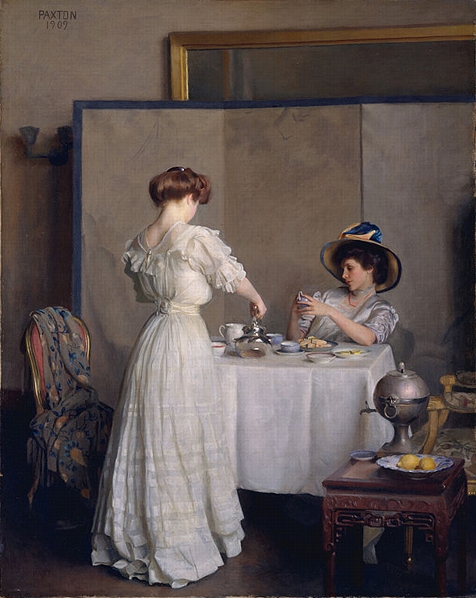
(above: William McGregor Paxton, Tea Leaves, c. 1909, oil on canvas, 36 x 28.3 inches, Metropolitan Museum of Art. Public domain, via Wikimedia Commons*)
Additional artwork by William McGregor Paxton
Edgar Payne from Resource Library article solely to this artist and essay (not dedicated solely to this artist by a named author) also see Edgar Payne from Laguna Plein Air Painters Association

(above: Edgar Alwin Payne, High Sierra, 1921, Steven Stern Fine Arts. Public domain, via Wikimedia Commons*)
Additional artwork by Edgar Alwin Payne
Edgar Payne, a prominent figure in American art history, dedicated his career to painting landscapes that captured the grandeur and essence of the natural world. Born in 1883, Payne was deeply influenced by the diverse landscapes of the United States, from the towering peaks of the Sierra Nevada to the expansive deserts of the Southwest. His artistic journey was driven by a profound connection to nature and a desire to convey its beauty and majesty through his brushstrokes.
Throughout his prolific career, Payne's paintings primarily focused on lansdscapes showcasing a mastery of color, composition, and light. His works often depicted scenes that epitomized the ruggedness and vastness of the American wilderness, resonating with viewers who were captivated by the sheer scale and serenity of his interpretations.
Payne's choice to paint landscapes was not merely artistic but also deeply personal. He found inspiration in the tranquility and solitude of nature, believing that by capturing these scenes on canvas, he could share his reverence for the natural world with others. His paintings served as visual narratives, inviting viewers to immerse themselves in the beauty of untouched landscapes and encouraging a renewed appreciation for the environment.
One of Payne's notable motivations was his belief in the transformative power of art. He saw painting as a means of preserving fleeting moments of natural beauty, immortalizing landscapes that might otherwise be lost to time or development. His dedication to capturing the essence of each scene, whether through the play of light on mountain peaks or the quiet reflection of lakes, reflected a commitment to both artistic expression and environmental advocacy.
Payne's artistic approach was characterized by a bold and expressive style, marked by thick brushstrokes and a keen attention to detail. He often painted en plein air, directly observing and interpreting landscapes in their natural settings. This practice not only allowed him to capture the nuances of light and atmosphere but also imbued his paintings with a sense of immediacy and authenticity.
Beyond his technical prowess, Payne's work resonated with audiences for its emotional depth and spiritual resonance. His landscapes were more than mere depictions of scenery; they conveyed a sense of awe and wonder, inviting viewers to contemplate the timeless beauty and significance of the natural world.
Throughout his career, Payne's contributions to American art were profound and enduring. He was a founding member of the California Art Club, an influential organization that promoted plein air painting and supported emerging artists. His legacy continues to inspire contemporary landscape painters and environmental advocates alike, underscoring the enduring relevance of his artistic vision and his commitment to celebrating the natural world through art.
In conclusion, Edgar Payne's paintings stand as testament to his lifelong dedication to capturing the beauty and majesty of the American landscape. Through his bold artistic vision and unwavering passion for nature, Payne not only left an indelible mark on the art world but also fostered a deeper appreciation for the landscapes that define the American experience. His legacy as a painter and advocate for the environment continues to resonate, reminding us of the profound connection between art, nature, and the human spirit.
The preceding brief essay was generated by AI mainly from our texts published online and edited in July 2024.
Elsie Payne from Resource Library essay (not solely dedicated to this artist by a named author) also see Elsie Palmer Payne from Laguna Plein Air Painters Association
Charles Payzant from Resource Library essay (not solely dedicated to this artist by a named author) also see Charles Payzant from Sullivan Goss, an American Gallery
Return to:
Distinguished Artists catalogue
TFAO wishes to express appreciation to Jay Phillips for his audit of this page and recommendations for improved links. If you are interested in volunteering to analyze other Distinguished Artist Series pages please see adding new artists and studying current links within Catalogue and database management.
Links to sources of information outside of our web site are provided only as referrals for your further consideration. Please use due diligence in judging the quality of information contained in these and all other web sites. Information from linked sources may be inaccurate or out of date. TFAO neither recommends or endorses these referenced organizations. Although TFAO includes links to other web sites, it takes no responsibility for the content or information contained on those other sites, nor exerts any editorial or other control over them. For more information on evaluating web pages see TFAO's General Resources section in Online Resources for Collectors and Students of Art History.
*Tag for expired US copyright of object image:

 Search Resource Library
Copyright 2024 Traditional Fine Arts Organization, Inc., an Arizona nonprofit corporation. All rights reserved.