
America's Distinguished Artists
a national registry of historic artists
A B C D E F G H I J K L M N O P Q R S T U V W X Y Z
Deceased American artists and artisans of note who created representational art are indexed in this catalogue by last name in alphabetical order. There are references to Resource Library texts and those from other sites. Click on letters below to access the alphabetical index.
Emilio Caballero from Resource Library essay (dedicated solely to this artist by a named author)
Giuseppe Cadenasso from Resource Library essay (not solely dedicated to this artist by a named author) also see Giuseppe Leone Cadenasso from Trotter Galleries, Inc.
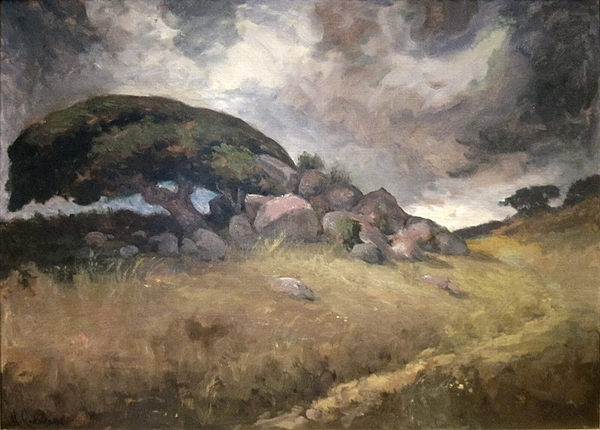
(above: Giuseppe Cadenasso, The Storm, 1903, 0il on canvas, Dayton Art Institute. Public domain, via Wikimedia Commons)
Paul Cadmus from Resource Library essay (dedicated solely to this artist by a named author) also see Paul Cadmus from Wikipedia
Emma Jane Cady from Resource Library article (not solely dedicated to this artist) also see Emma Jane Cady from Wikipedia
Henry Newell Cady from Resource Library essay (not solely dedicated to this artist by a named author) also see Henry Newell Cady from Galerie Gabrie
Harrison Cady from Resource Library essay (dedicated solely to this artist by a named author) Walter Harrison Cady from Wikipedia
William V. Cahill from Resource Library essay (not solely dedicated to this artist by a named author) also see William V. Cahill from Laguna Art Museum
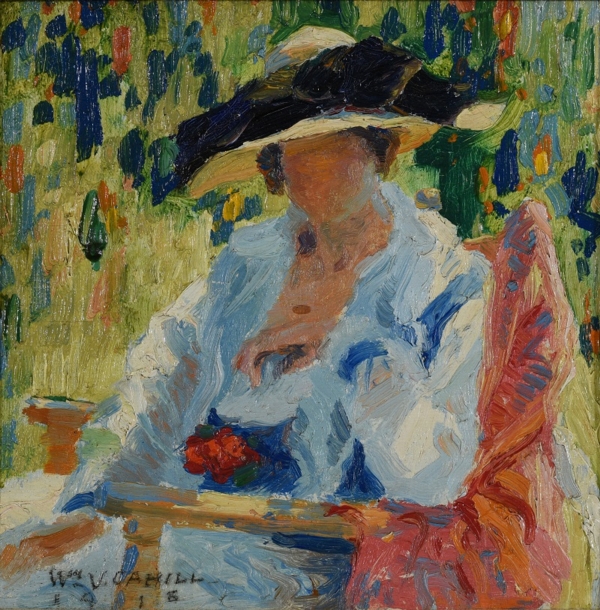
(above: William Vincent Cahill, Summer, oil
on canvas, c. 1915, 7 3/4 x 7 3/4 inches, Laguna Art Museum, gift of
Elsie Palmer Payne. Public domain, via Wikimedia Commons*)
Martha Cahoon from Resource Library article (dedicated solely to this artist) also see Martha Cahoon from Wikipedia
Ralph Cahoon from Resource Library article (not solely dedicated to this artist) also see Ralph Cahoon from Wikipedia
Letterio Calapai from Resource Library article (not solely dedicated to this artist) also see Letterio Calapai from Wikipedia
Alexander Milne Calder from Resource Library essay (not solely dedicated to this artist by a named author) also see Alexander Milne Calder from Wikipedia
A. Stirling Calder from Resource Library essay (not solely dedicated to this artist by a named author) also see Alexander Stirling Calder from Wikipedia
Isaac Henry Caliga from Resource Library article (not solely dedicated to this artist) also see Isaac Henry Caliga fromVose Galleries
Richard "Dick" Calkins from Resource Library article (not solely dedicated to this artist) also see Richard "Dick" Calkins from Lambiek
Harry Callahan from Resource Library article (dedicated solely to this artist)
Kenneth Callahan from Resource Library essay (not solely dedicated to this artist by a named author) also see Kenneth Callahan from HistoryLink.org
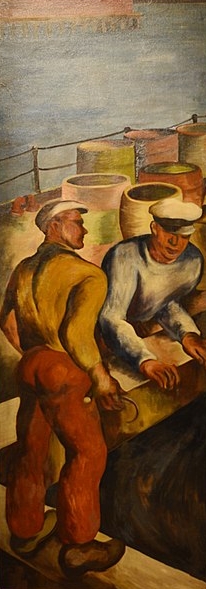
(above: Kenneth Callahan, assisted
by Hovey Rich and Julius Twohy, Unloading, from the mural cycle 'Men
Who Work the Ships,' c. 1935-36, oil on canvas mounted on masonite. Originally
commissioned for the Seattle Marine Hospital (later Public Health Hospital,
then outpatient clinic Pacific Medical Center, headquarters of Amazon.com
c. 1999-2011, now Pacific Tower), the mural cycle was discovered in basement
storage in 1982 in the Pacific Medical Center era, and donated to the Museum
of History and Industry. Photographed by Joe Mabel in an exhibit at
the Tacoma Art Museum, February 2020. Public domain, via Wikimedia Commons*)
Mary Callan from Resource Library essay (not solely dedicated to this artist by a named author)
Mary Callery from Resource Library essay (not solely dedicated to this artist by a named author) also see Mary Callery from Wikipedia
Burton Callicott from Resource Library essay (not solely dedicated to this artist by a named author) also see Burton Harry Callicott from Wikipedia
Cameron from Resource Library article (not solely dedicated to this artist) also see Cameron (Marjorie Cameron Parsons Kimmel) from Cameron Parsons Foundation
James Cameron from Resource Library article (not solely dedicated to this artist) also see James Cameron from Tennessee Historical Society
Margaret Camfferman from Resource Library essay (not solely dedicated to this artist by a named author) also see Margaret Camfferman from Women Painters of Washington
Peter Camfferman from Resource Library essay (not solely dedicated to this artist by a named author) also see Peter Camfferman from South Whidbey Record
Albert H. Campbell from Resource Library article (not solely dedicated to this artist) also see Albert H. Campbell from Linda Hall Library
Blendon Reed Campbell from Resource Library article (not solely dedicated to this artist) also see Blendon Reed Campbell from Vose Galleries
Frances S. Campbell from Resource Library biography dedicated to this artist by a named author
Rose L. Campbell from Resource Library biography dedicated to this artist by a named author
Thomas Campbell from Resource Library article (not solely dedicated to this artist) also see Thomas Campbell from Case Antiques

(above: V. Floyd Campbell, The "Roosevelt Bears", Teddy-B and Teddy-G, 1906, Eaton, Seymour - The Roosevelt Bears: Their Travels And Adventures, Philadelphia: E. Stern & Company, Inc. Public domain, via Wikimedia Commons*)
John S. Candelario from Resource Library article (dedicated solely to this artist)
Milton Caniff from Resource Library article (not solely dedicated to this artist) also see Milton Arthur Paul Caniff from Wikipedia
Jennie Vennerström Cannon from Resource Library document text (mainly dedicated to this artist by a named author)
T. C. Cannon from Resource Library essay (dedicated solely to this artist by a named author) also see Tommy Wayne Cannon from Wikipedia
Cornell Capa from Resource Library article (not solely dedicated to this artist) also see Cornell Capa from Wikipedia
Robert Capa from Resource Library article (dedicated solely to this artist)
Al Capp from Resource Library essay (not solely dedicated to this artist by a named author) also see Al Capp from Wikipedia
Kate Carew from Resource Library biography dedicated to this artist by a named author, also see Kate Carew from Wikipedia
Frederick Carder from Resource Library article (dedicated solely to this artist) also see Frederick Carder from Wikipedia
V. J. Cariani from Resource Library article (not solely dedicated to this artist) also see Varaldo J. (V.J.) Cariani from Fine Estate Art
Arthur B. Carles from Resource Library article (dedicated solely to this artist) also see Arthur Beecher Carles from Wikipedia
Anne Carleton from Resource Library essay (dedicated solely to this artist by a named author)
John Carlin from Resource Library essay (not solely dedicated to this artist by a named author) also see John Carlin from Questroyal Fine Art
Eleanor M. Carlisle from Resource Library biography dedicated to this artist by a named author
Soren Emil Carlsen from Resource Library essay (not solely dedicated to this artist by a named author) also see Soren Emil Carlsen from Wikipedia

(above: Soren Emil Carlsen, Study in Grey, 1906, oil on canvas, 86 x 97 cm, Dallas Museum of Art, Munger Fund. Image and text source: Wikimedia Commons - public domain*)
John F. Carlson from Resource Library article (not solely dedicated to this artist) also see John Fabian Carlson from Wikipedia
*Tag for expired US copyright of object image:

Links to sources of information outside of our web site are provided only as referrals for your further consideration. Please use due diligence in judging the quality of information contained in these and all other web sites. Information from linked sources may be inaccurate or out of date. TFAO neither recommends or endorses these referenced organizations. Although TFAO includes links to other web sites, it takes no responsibility for the content or information contained on those other sites, nor exerts any editorial or other control over them. For more information on evaluating web pages see TFAO's General Resources section in Online Resources for Collectors and Students of Art History.
 Search Resource Library
Copyright 2022 Traditional Fine Arts Organization, Inc., an Arizona nonprofit corporation. All rights reserved.